In May, the Supreme Court will consider petitions against anti-conversion legislation.
"List it in the week commencing May 13, 2025," stated Sanjiv Khanna, India has Chief Justice. Notably, on May 13, CJI Khanna is scheduled to retire.
On Wednesday, the Supreme Court said that it would consider petitions against anti-religious conversion laws throughout India in May.
The purpose of these legislation is to address forced or illegal religious conversions. Critics contend, however, that these rules are being abused to target particular religious communities and that they have an impact on people's freedom of religion.
When the case was briefly heard today, the Chief Justice of India (CJI) Sanjiv Khanna and Justice PV Sanjay Kumar's bench stated that it should be heard in more depth.
"We must listen to this. CJI Khanna stated, "List it in the week starting May 13, 2025."
It is noteworthy because on May 13, CJI Khanna is scheduled to retire from office.
Advocate Ashwini Upadhyay, meantime, defended the challenged anti-conversion legislation today, claiming that thousands of Hindus were being forcibly converted to other religions on a daily basis. A public interest litigation (PIL) petition against illegal religious conversions has been filed by Upadhyay.
"Conversion is waging war, my Lord. According to Upadhyay, 10,000 Hindus are converted every day.
However, the Court was unwilling to hear his arguments today without first considering those of other petitioners.
"What's causing your argument? Have we heard the opposing viewpoint? The Bench answered, "Then we must hear them first.
The Himachal Pradesh Freedom of Religion Act, 2019, the Madhya Pradesh Freedom of Religion Ordinance, 2020, the Uttar Pradesh Prohibition of Unlawful Conversion of Religion Ordinance, 2020, and a comparable law in Uttarakhand are among the laws that are being contested in a number of petitions before the Supreme Court.
The Court also permitted the Jamiat Ulama-i-Hind to get involved in the case in 2021 when it claimed that many Muslims were being harassed nationwide by the use of such anti-conversion laws.
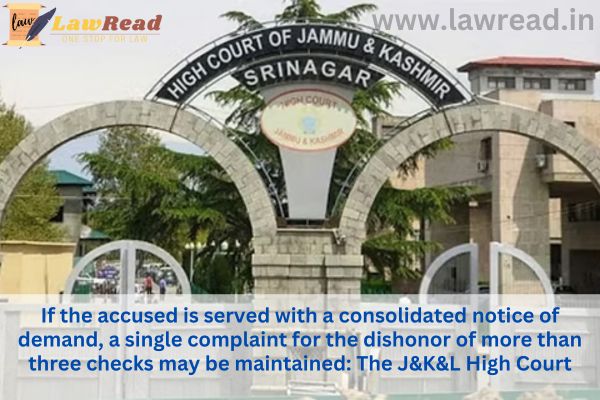
If the accused is served with a consolidated notice of demand, a single complaint for the dishonor of more than three checks may be maintained: The J&K&L High Court
Orissa High Court Shares Concerns About Data Breach & Privacy Violations While Upholding Mandatory PAN-Aadhaar Linking For Demat Accounts
The Supreme Court dismisses the case against a public servant, stating that S. 197 CrPC does not envision the concept of "deemed sanction."
Community Invitation
Enjoying LawRead?
You've been reading on LawRead! Create a free student or advocate account to unlock our complete legal platform:
Premium Courses & Mock TestsJudiciary, UGC-NET, and Bar examination lecture bundles, video classes, and structured notes.
Community Discussion ForumAsk legal questions, reply to ongoing case discussions, and connect with legal scholars and peers.
Unlimited PDF DownloadsDownload Bare Acts, landmark judgments, study notes, and legal updates without any limit.
Already have an account?•
Sign in to LawRead
Free Download Limit Reached (2 of 2 used)
Sign in or create a free account to download this PDF and enjoy unlimited access across all Bare Acts, Notes & Judgements.
.jpg)